
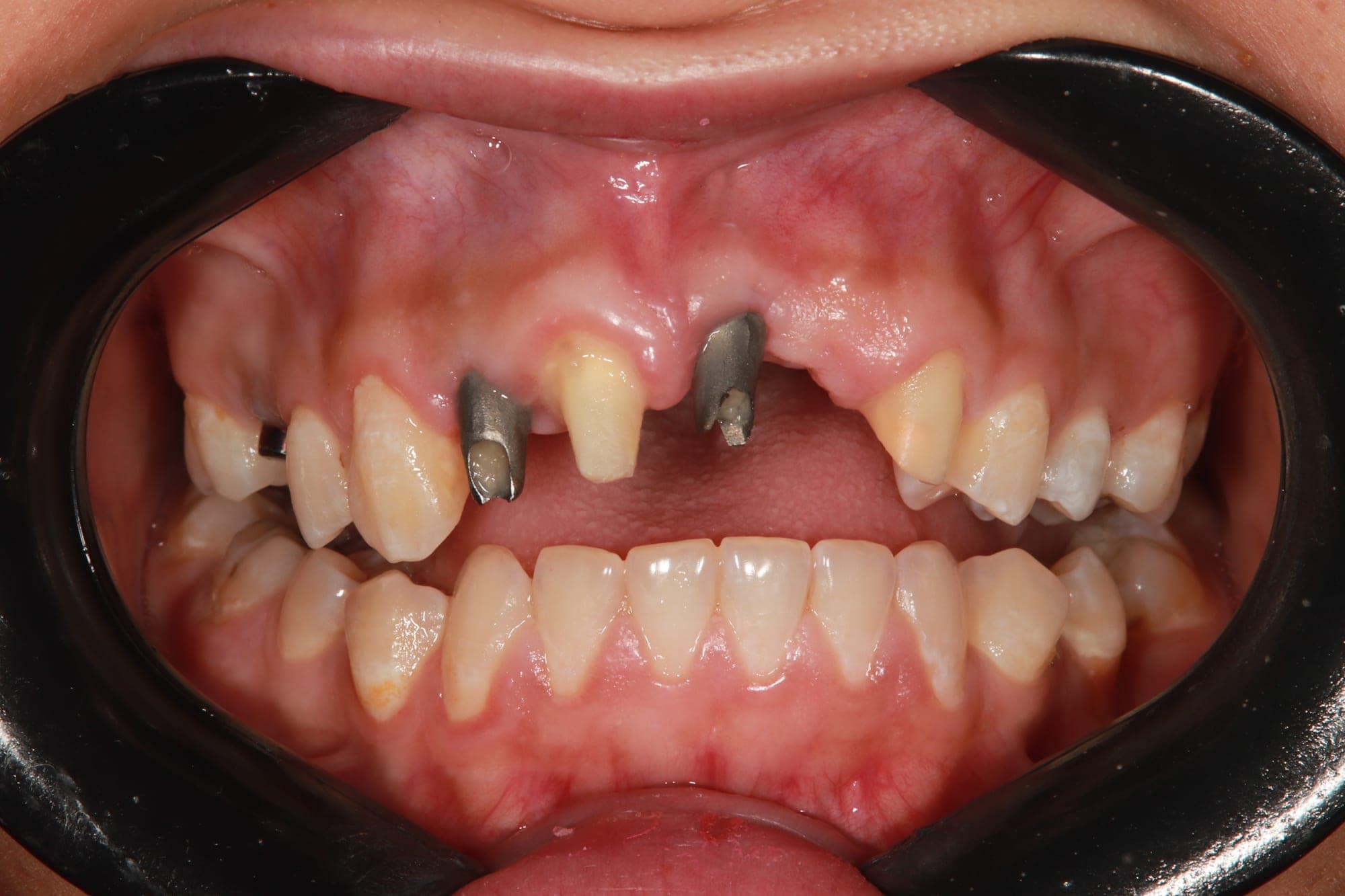
 Before
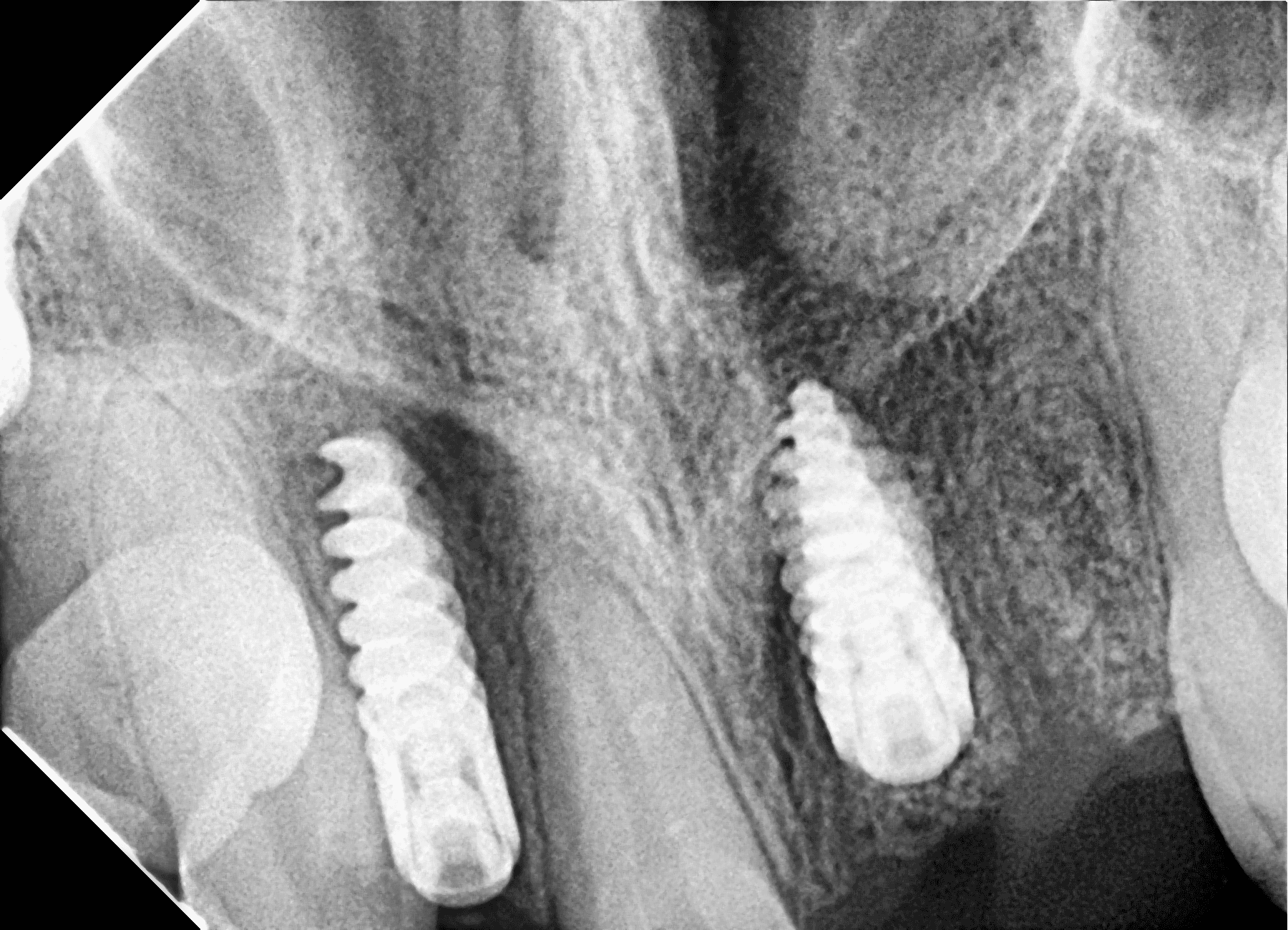 After
AfterPremium Implants Transformation
Final restoration placed. Indistinguishable from natural teeth, restoring full function and a complete, gorgeous smile.
Overview
A dental implant replaces a missing tooth with a titanium post that integrates with the jawbone before supporting a custom crown. Unlike a bridge or removable denture, an implant doesn't rely on neighboring teeth — it restores chewing function independently and can last for decades with proper care.
| Dental Implant | Dental Bridge | |
|---|---|---|
| Tooth preparation | None needed on neighboring teeth | Neighboring teeth must be prepared/reduced to anchor the bridge |
| Bone preservation | Stimulates and helps preserve jawbone | Doesn't prevent bone loss at the missing-tooth site |
| Longevity | Decades, often a lifetime for the implant post | Typically 10–15 years before replacement is needed |
| Cleaning | Cleaned like a natural tooth | Requires special flossing tools to clean under the bridge |
| Adjacent teeth | Unaffected | Relied upon for support, which can shorten their own lifespan |
| Typical indication | Standalone replacement, independent of neighboring teeth | Historically used when neighboring teeth already needed crowns anyway |
Whether you need to fast before your appointment depends on whether sedation is planned for your case, so please confirm your own fasting instructions with the clinic before you come in rather than assuming.
Contact the clinic before your appointment and we will confirm exactly what applies to you.
As with any surgical procedure, risks include infection, bleeding, or temporary nerve sensitivity depending on implant location. Implant-specific: while uncommon, an implant can occasionally fail to integrate with the bone, which may require additional treatment — this is a genuine possibility worth naming rather than omitting, even though it's not the typical outcome. Following aftercare guidance during healing meaningfully reduces this risk.
BeforeAfterFinal restoration placed. Indistinguishable from natural teeth, restoring full function and a complete, gorgeous smile.
| Component | Detail |
|---|---|
| Implant system | Korean: 15,000 EGP · Swiss: 18,000 EGP |
| What's included | Implant surgery, laboratory work, and the crown are bundled into the package price |
| Additional | X-ray/imaging for planning, and any preliminary steps such as a bone graft, are confirmed in your written estimate at consultation, including whether they are billed separately |
The price difference between the Korean and Swiss implant systems typically reflects brand reputation and long-term track record rather than a difference in the procedure itself.
Given the total investment, this is also the procedure where financing options matter most.
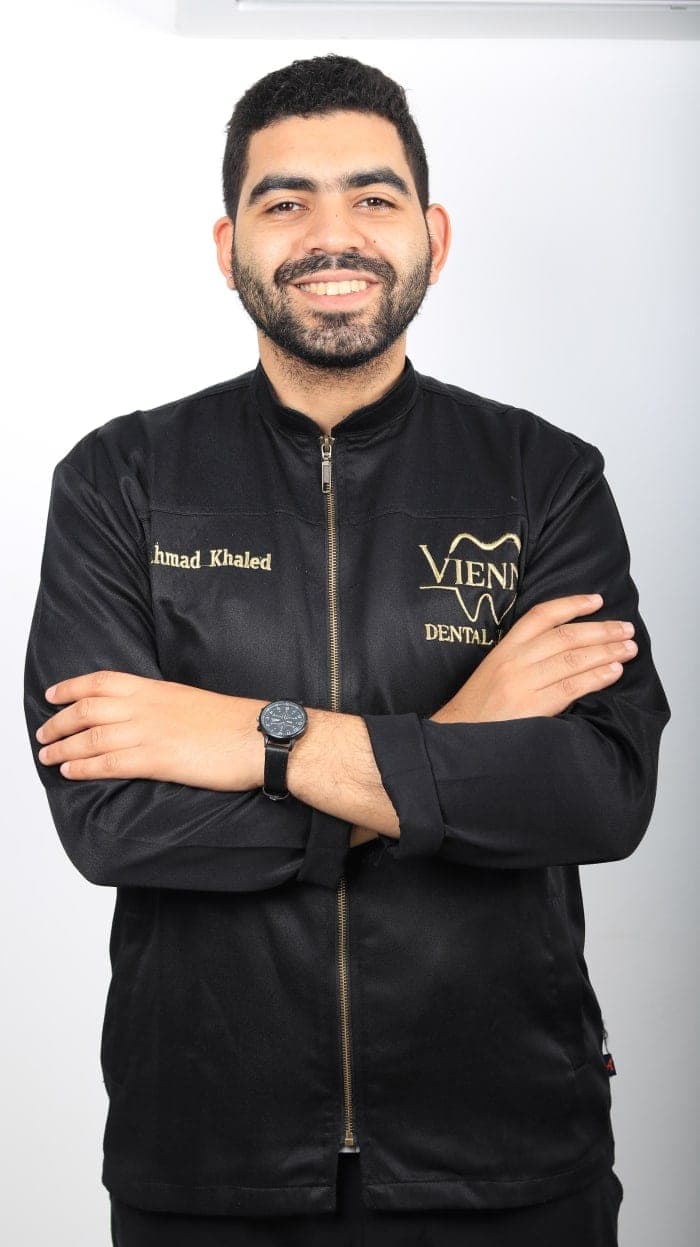
Dental implant treatment at Vienna Dental Clinic is performed by Dr. Ahmed Khaled, Surgery & Implants.
Dr. Ahmed Khaled brings advanced surgical training to Vienna Dental Clinic, where he leads Oral Surgery. That specialized training informs the full range of surgical and restorative care he provides at the clinic, from routine and surgical extractions through wisdom tooth removal, dental implants, and periodontal procedures like crown lengthening and gum depigmentation.
A dental implant replaces a missing tooth with a titanium post placed into the jawbone, topped with a custom crown — unlike a bridge or denture, it doesn't rely on neighboring teeth and is designed to function and look like a natural tooth for decades.
With proper care, 20+ years or a lifetime — the titanium post itself rarely needs replacement, though the crown on top may need replacing after 10–15 years of wear.
The placement surgery is done under anesthesia, so you shouldn't feel pain during it. Some soreness and swelling afterward is normal and manageable, similar to other oral surgery procedures.
Both are established implant systems; the price difference generally reflects brand and long-term track record rather than a difference in the procedure itself — worth a direct conversation at consultation about which fits your situation and preference.
Several months in total — the placement surgery itself is a single appointment, but the healing period before the crown can be placed typically runs 3–6 months. This isn't a quick fix, and setting that expectation upfront avoids frustration partway through treatment.
Smoking can affect healing and integration, so it's worth discussing directly at consultation — candidacy is assessed individually rather than ruled out by default.
While uncommon, it can happen — additional treatment is usually possible, and following aftercare guidance during healing meaningfully reduces this risk in the first place.
As with any surgical procedure, infection is a possible risk, which is why a full medical history review and aftercare guidance are part of the process.
Yes — multiple missing teeth can each be addressed with individual implants, or in some cases a bridge-like restoration supported by implants, depending on your specific situation. This is assessed during consultation.
Soft foods are recommended in the days immediately after placement surgery; normal eating typically resumes as soreness subsides, well before the full healing period is complete.
No special tools are needed — an integrated implant with its crown is cleaned the same way as a natural tooth, with regular brushing, flossing, and checkups.
No. With our painless dentistry protocol and advanced anesthesia techniques, dental implant placement is comfortable, and most patients return to their normal routine the next day.
Medically reviewed by Dr. Ahmed Khaled
At Vienna Dental Clinic a complete dental implant costs 15,000 EGP with a Korean implant or 18,000 EGP with a Swiss implant. The final plan is confirmed after a diagnostic examination (400 EGP).
Medically reviewed by Dr. Ahmed Khaled
Implant placement itself takes about 30–60 minutes per tooth. Full healing and final crown placement typically take 3–6 months, depending on bone quality — we plan every case digitally with 3D imaging before we start.
Medically reviewed by Dr. Ahmed Khaled