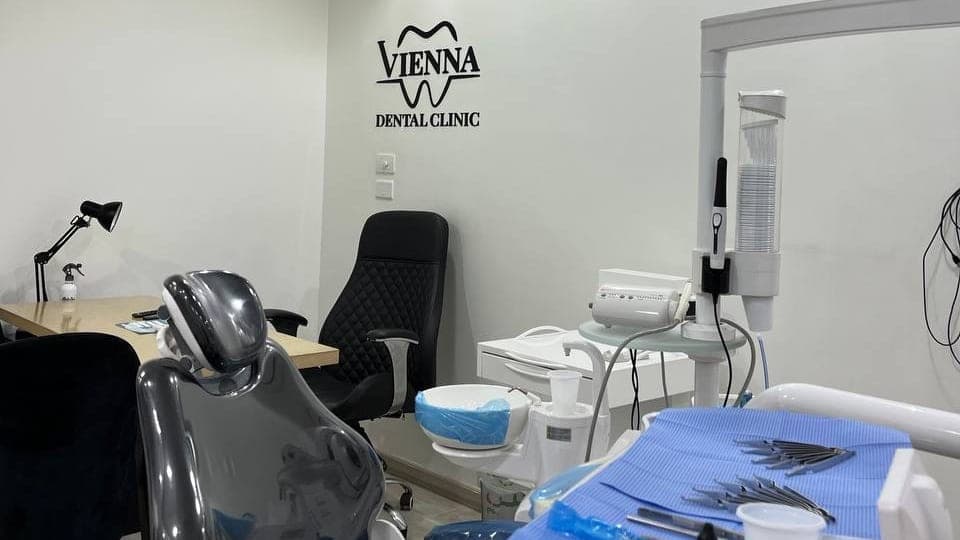
Most patients never see the part of dentistry that matters most for their safety: what happens to an instrument between the last patient and you. This guide walks you through it, step by step, using real photos from our treatment rooms in Nasr City.
Why sterilization matters in dentistry
Dental instruments touch blood, saliva and soft tissue. If an instrument is not properly processed between patients, bacteria and viruses can be carried from one person to the next. The good news is that this risk is very low when a clinic follows the full reprocessing chain every single time. The CDC describes instrument reprocessing as a series of steps that must all be done correctly and in the right order, because skipping one breaks the chain.
At Vienna Dental Clinic, infection control is not a separate department. It is built into how every appointment is set up, from the moment the room is prepared to the moment it is reset for the next patient.
Cleaning, disinfection and sterilization: what is the difference?
These three words are often used as if they mean the same thing. They don't.
Step | What it does | Where we use it |
|---|---|---|
Cleaning | Physically removes debris, blood and saliva | Every reusable instrument, before anything else |
Disinfection | Kills most germs on a surface | Chairs, counters, cabinets, between every patient |
Sterilization | Destroys all microorganisms, including resistant spores | Every reusable instrument that enters your mouth |
An instrument cannot be sterilized properly if it was not cleaned first, which is why the order matters.
Our instrument reprocessing chain
1. Cleaning
After treatment, used instruments are taken out of the treatment room and cleaned to remove all visible debris. Sterilization works on clean surfaces; it does not replace cleaning.
2. Packaging
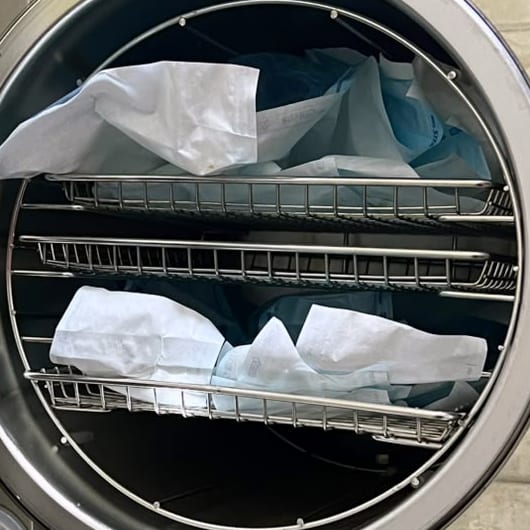
Clean instruments are sealed in sterilization pouches. The pouch keeps the instrument sterile after the cycle ends and until it is opened at your chair.
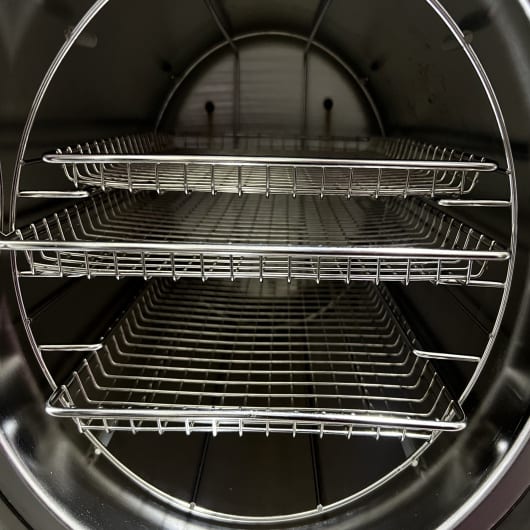
3. Sterilization in a Class B autoclave
We sterilize with steam in a Class B autoclave. Class B is the category defined by the European standard EN 13060 for sterilizers that remove air with a vacuum before steam is introduced. That matters because dental tools are not all simple, solid shapes. Handpieces and other hollow instruments have narrow internal channels, and wrapped instruments sit inside pouches. A vacuum cycle pulls the air out so steam can reach every surface, inside and out. Simpler sterilizers that rely on gravity can leave air pockets in exactly those places.
4. Storage and opening in front of you
Sterilized pouches are stored sealed. Your instruments are opened at the start of your treatment and laid out on a fresh, single-use tray cover.
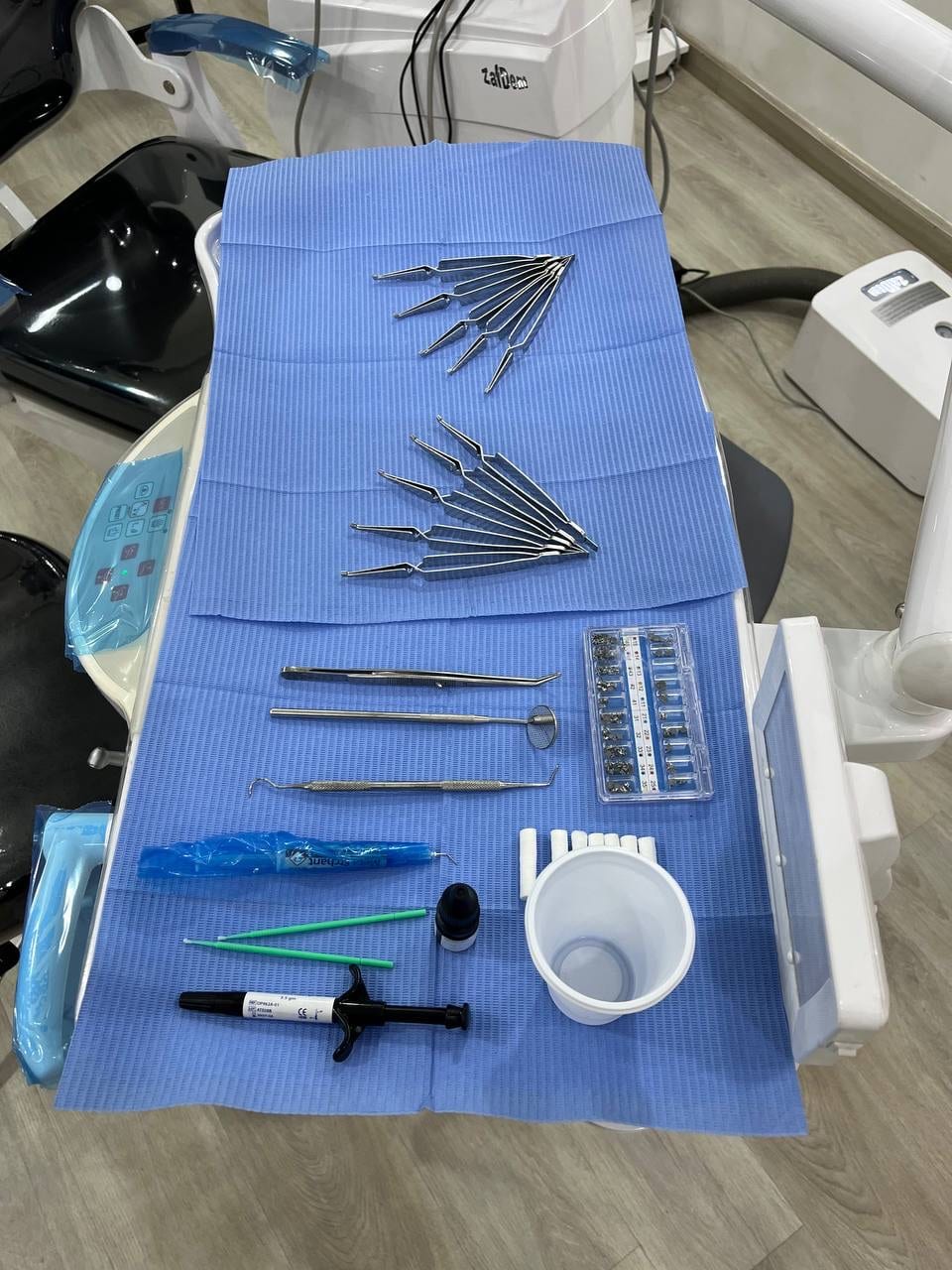
Single-use means single-use
Some items should never be reused, no matter how they are cleaned. At Vienna Dental Clinic the following are used once and discarded:
Gloves and face masks, changed for every patient
Patient bibs and headrest covers
Drinking cups and suction tips
Needles and anesthetic cartridges
Tray drapes and barrier films
Barrier protection on every surface you see
Some parts of a treatment room are touched constantly but cannot go into an autoclave: the operating light handles, the chair controls, the air-water syringe and the intraoral scanner. These are covered with clear or blue barrier film that is replaced for every patient. If you look closely at the photos from our treatment rooms, you will see it on the light handles and chair arms.
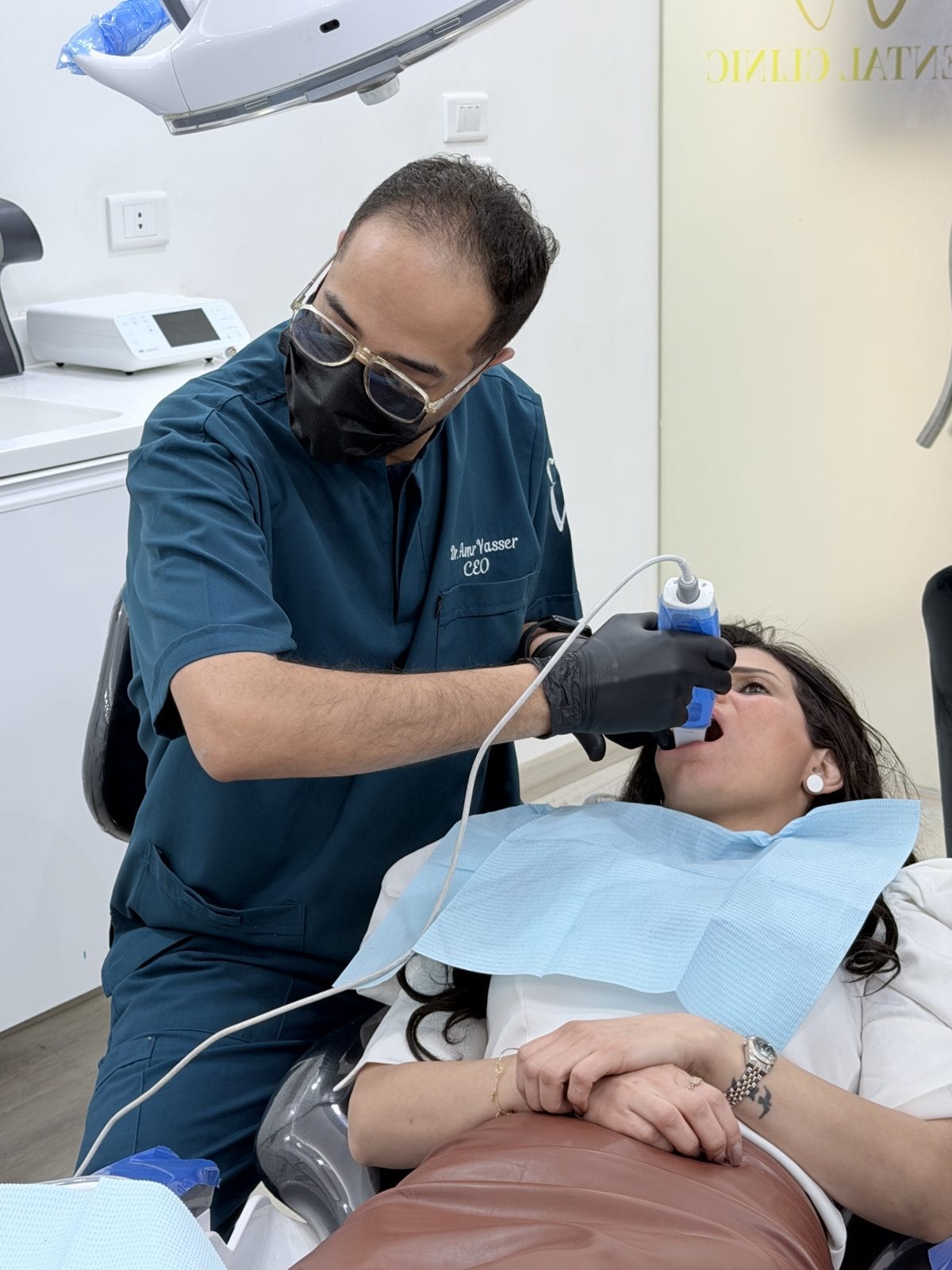
Between patients, every surface that may have been touched or exposed to spray, including the chair, counters and the unit, is wiped down with a hospital-grade disinfectant.
Protecting you during treatment
Infection control does not stop at clean tools. During treatment we also:
Isolate the tooth with a rubber dam during root canal treatment, which keeps saliva and bacteria out of the canal and stops small instruments or rinsing solutions from reaching your throat.
Use high-volume suction to reduce spray during cleaning and drilling.
Wear full personal protection: gloves, masks and eye protection for the dentist and the assistant.
Safety beyond sterilization
Patient safety is a wider idea than clean instruments. It also includes:
Lower-dose imaging. We use digital X-rays, which typically need less radiation than traditional film.
On-site laboratory investigations when your medical history means blood tests should be checked before a procedure.
Modern anesthesia protocols, including topical numbing before injections.
What you can check yourself
You don't need to be a dentist to spot a careful clinic. On your next visit, anywhere, look for:
Instruments opened from sealed pouches in front of you.
Fresh gloves put on after the dentist sits down with you.
Barrier film on the light handles and chair controls.
A clean, uncluttered treatment room between patients.
Related guides: General dentistry · Root canal treatment · Dental examination
Frequently asked questions
Are dental instruments reused?
Many dental instruments are made of surgical steel and are designed to be reused, but only after the full cleaning, packaging and sterilization cycle. Items that cannot be reliably sterilized, such as needles, suction tips and cups, are single-use and discarded after one patient.
What is a Class B autoclave?
A Class B autoclave is a steam sterilizer that removes air from its chamber with a vacuum before sterilizing. Under the European standard EN 13060, it is the class designed to sterilize hollow instruments such as handpieces and instruments packed in pouches, where trapped air could otherwise block the steam.
Can I ask to see my instruments being opened?
Yes. Your instruments are opened from sealed pouches at the start of your appointment, and our team is happy to answer any question about how they were processed.
Is it safe to visit the dentist during flu season?
Yes. The same protocols that protect you from bloodborne infections, including barriers, disinfection, masks and single-use items, also reduce the risk from respiratory germs. If you are unwell, let us know before your visit and we can reschedule non-urgent treatment.

Dr. Amr Yasser, CEO & Founder, Vienna Dental Clinic
Sources: CDC, Best Practices for Sterilization in Dental Settings; CDC, Guidelines for Infection Control in Dental Health-Care Settings (2003); European standard EN 13060, Small steam sterilizers.